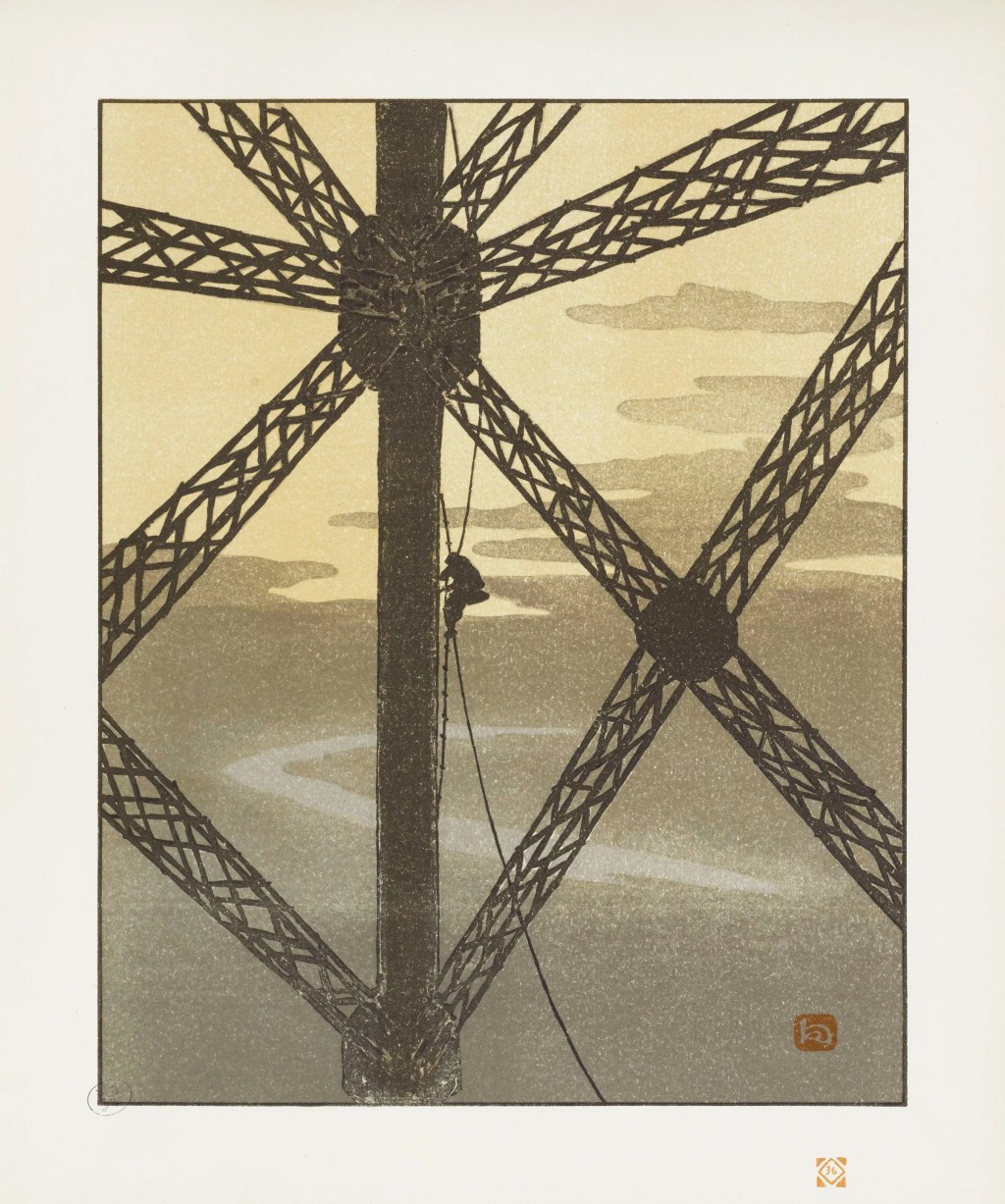
In late January 1887, construction work began on Gustave Eiffel’s eponymous tower — a process that was completed at record speed, just in time for the 1889 Exposition Universelle. At 330 metres, the tower would be the world’s tallest manmade structure to date, a beacon of France’s industrial prowess, but no sooner had the foundations been laid than the controversy began. Critics feared a “useless”, “monstruous” eyesore that would overshadow Notre Dame, the Pantheon, and other cherished monuments on the Parisian skyline. As the tower emerged, one iron girder after the next, the verdicts came in: a “hole-riddled suppository” (Joris-Karl Huysmans), a “truly tragic streetlamp” (Léon Bloy). Others…
Read the full article in The Public Domain Review, available online here.
 daisysainsbury.com